Web + content operations

A Content Production Platform the Owner Runs Herself

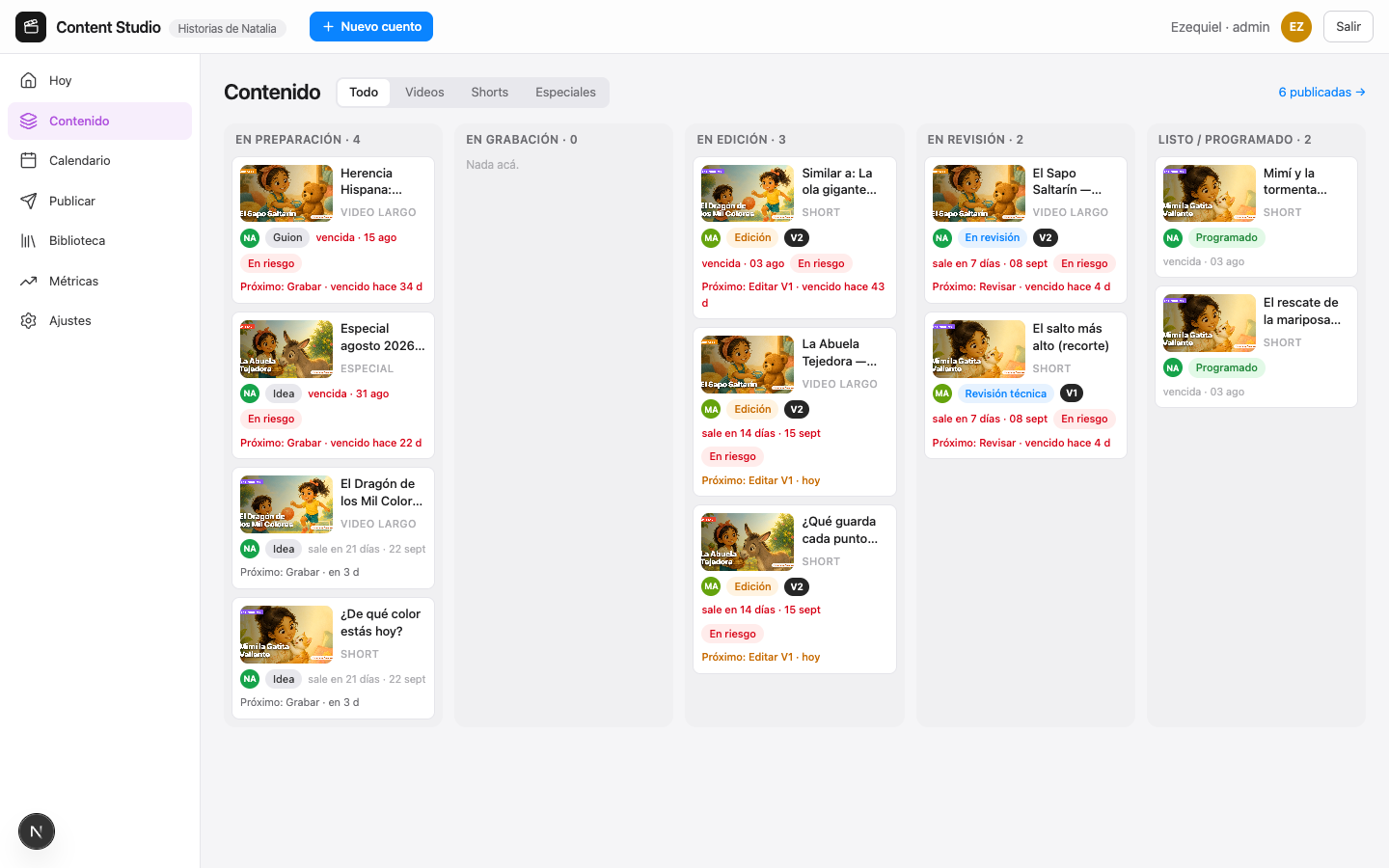
One board from idea to published — long video, shorts, blog and thumbnails as one family, with a voice-controlled teleprompter and automatic technical QC.

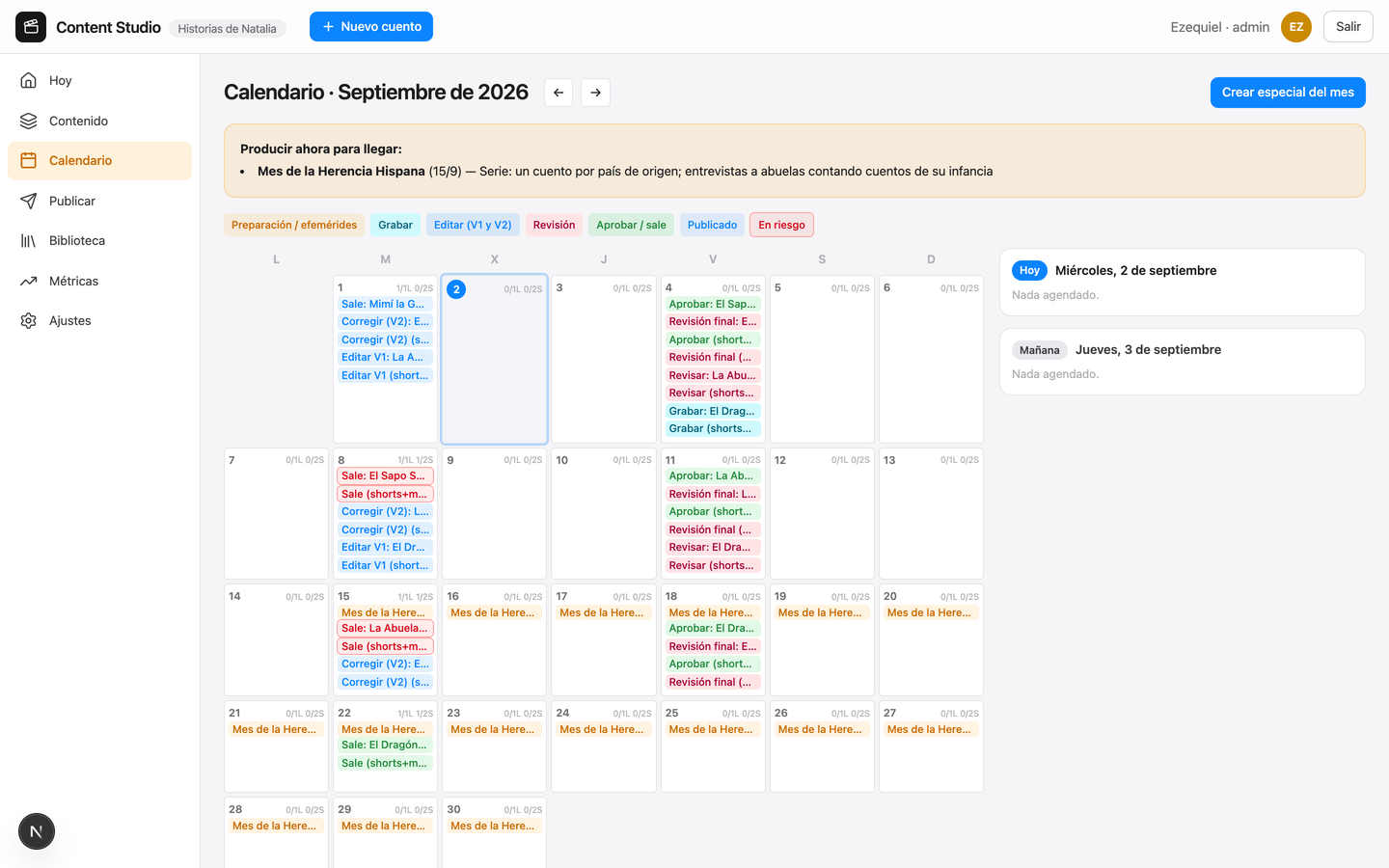
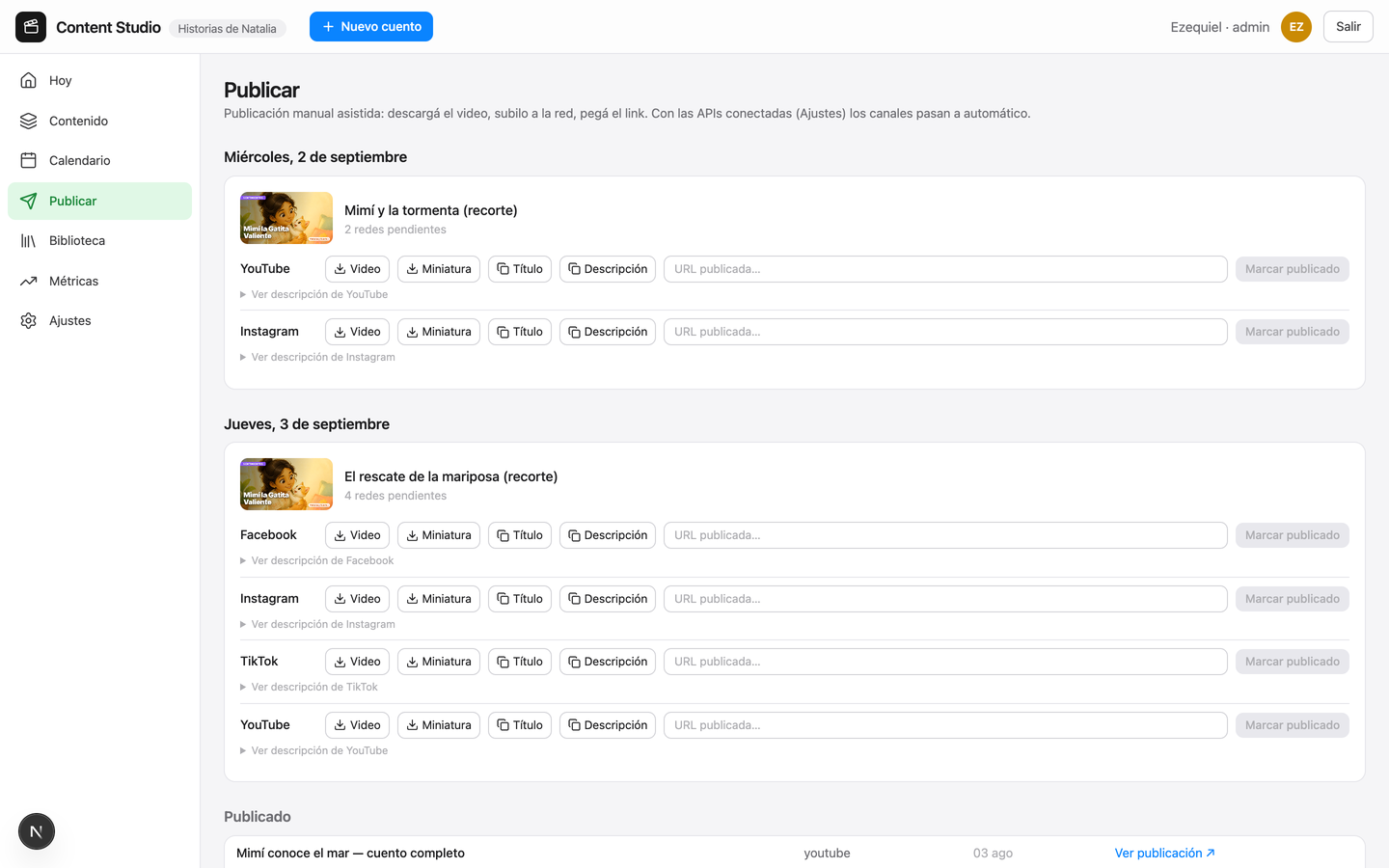
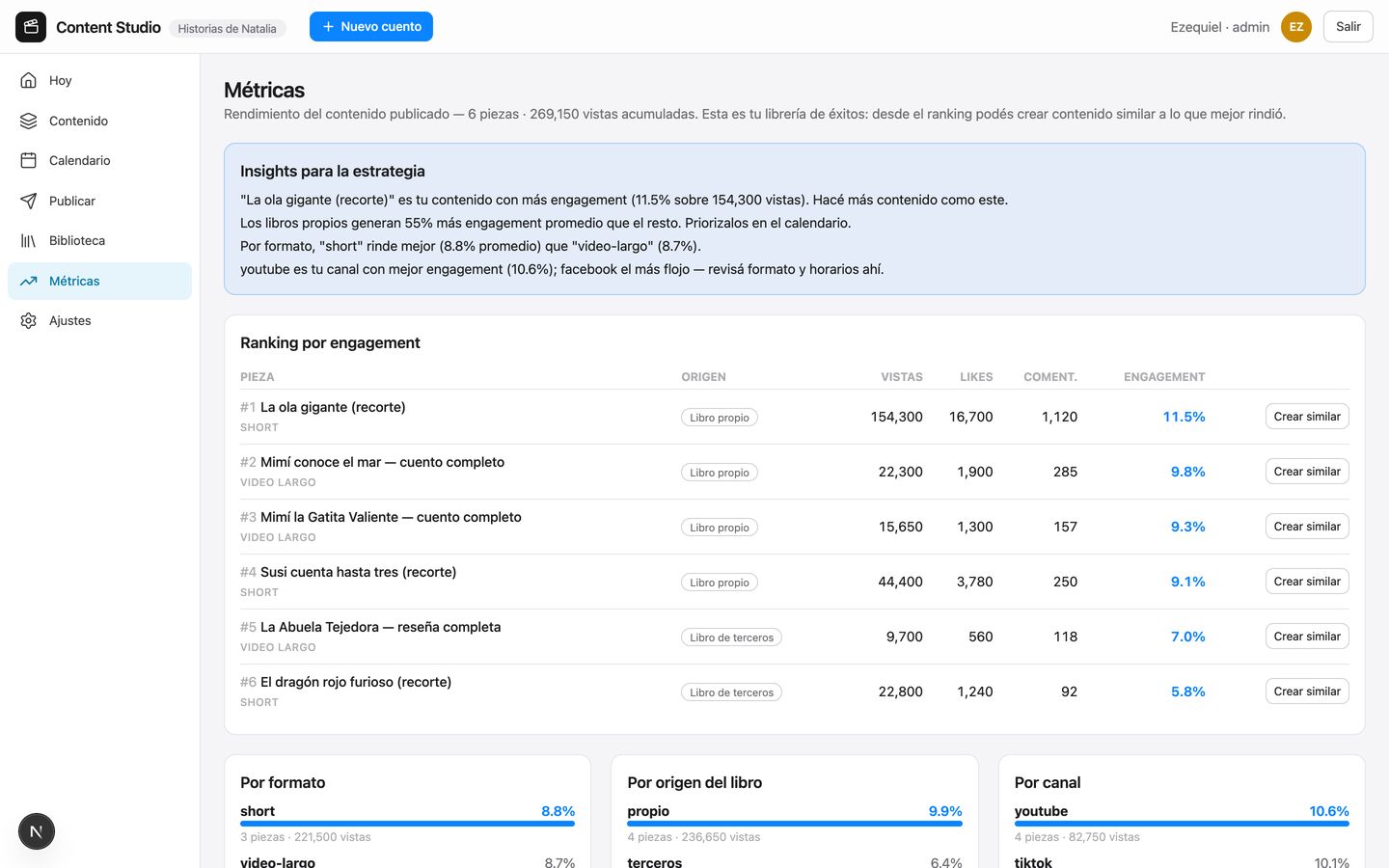
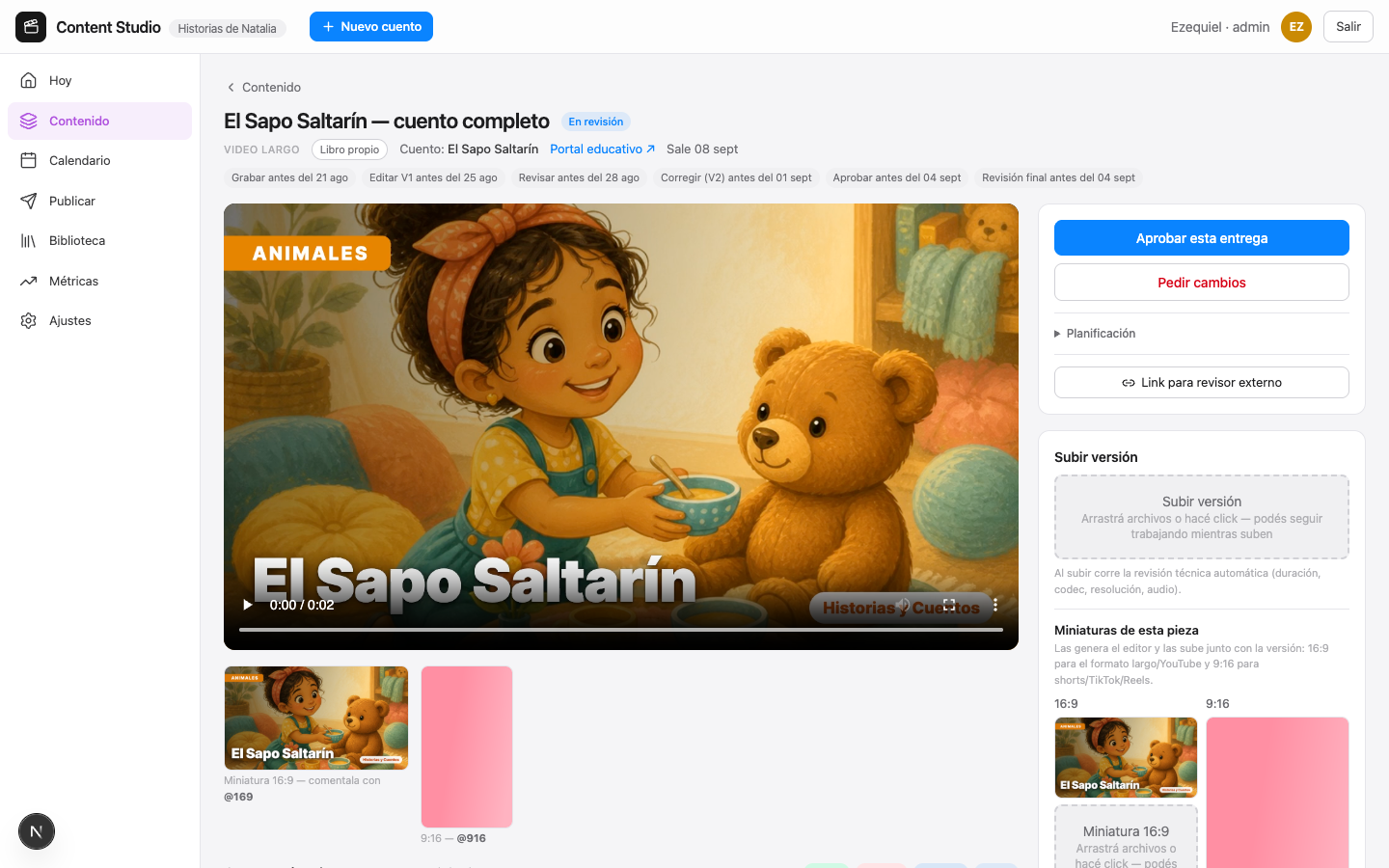
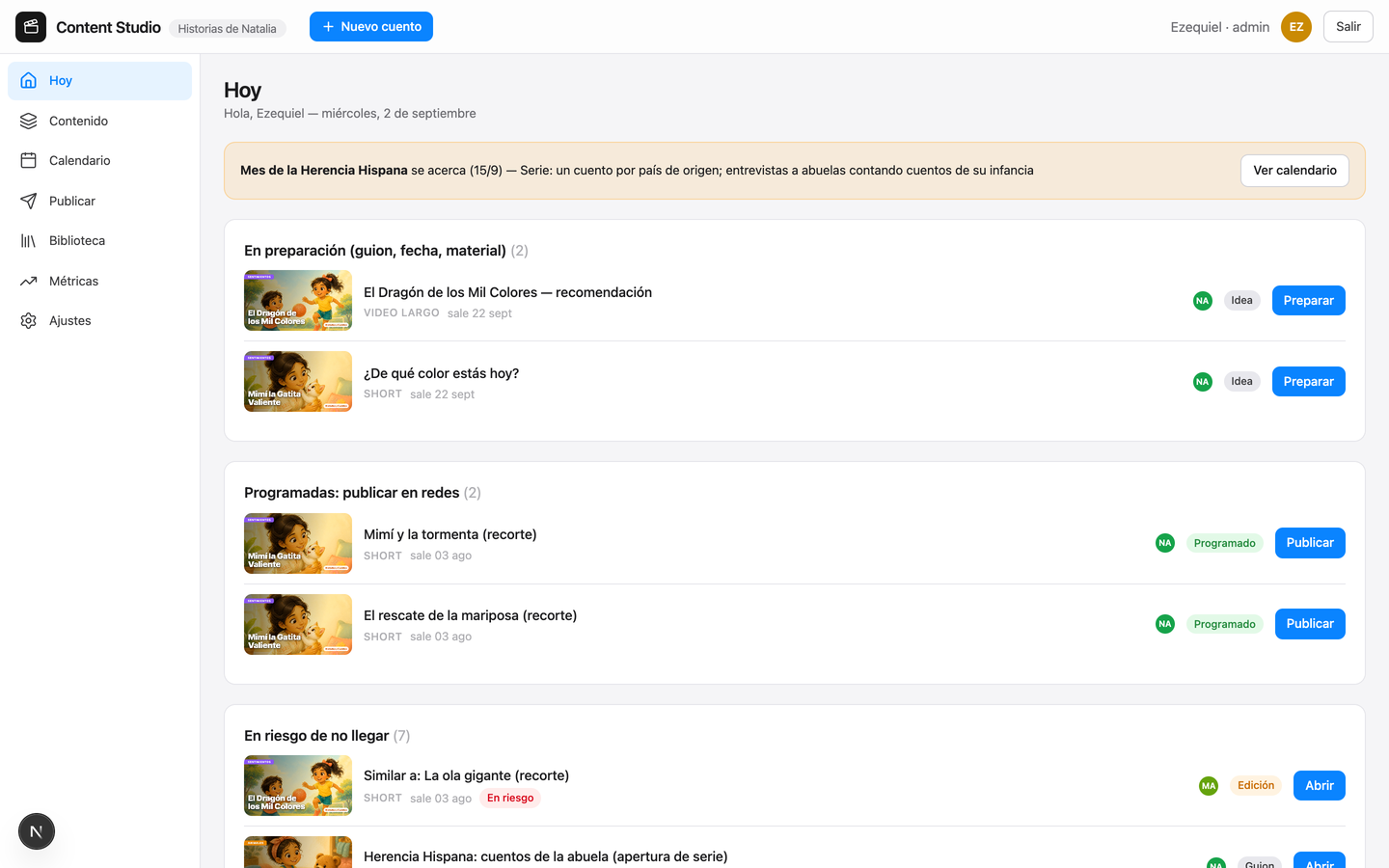
Content Studio board: video cards with thumbnails moving through preparation, production, review and scheduled columns A piece's detail view: stage deadlines, video review with approve and request-changes, automatic technical QC on upload, 16:9 and 9:16 thumbnails, external reviewer link

Real interface — the content board and a piece under review, on the platform’s demo tenant. All demo data.

Web + content operations

Brand Content Studio

One board, daily publishing cadence

Problem
A voice-over artist ran her business across a WordPress site with 20+ plugins, a content library in a spreadsheet on Drive, a separate job board, and manual invoice chasing. Every site update or new feature meant hiring a programmer — again.
What we built
A content engine she administers herself. Each story becomes a family of derivatives — long video, vertical shorts, blog post, per-channel descriptions, thumbnails — moving across one board from idea to published, with a deadline for every stage and a responsible person for every step. The platform runs the production floor too: AI-drafted scripts feed a teleprompter she controls with her voice — saying "hook" or "moraleja" jumps to that section for another take — thumbnails where AI paints the scene and the system composites her real photo with pixels untouched, and automatic technical QC on every uploaded version. Reviewers outside the team get a link, not an account.
What changed
Capabilities the business simply didn't have before — and no more hiring a programmer for every periodic update. The board is built to sustain a daily publishing cadence — record, review, approve and schedule without leaving the platform — and the loop from idea to published content runs from one place she controls.

Site rebuild: 20+ plugins down to zero — no more hiring a programmer for routine updates.
What the system does

  • One master piece becomes a family: a long video, vertical shorts, a monthly special, a blog post, per-network descriptions and thumbnails
  • Nine production states from idea to published — enforced by the system, not by discipline
  • A daily “today” screen per person: what ships, what's yours, what's at risk
  • Automatic technical QC on every uploaded version — duration, codec, resolution, loudness — with a concrete rejection reason
  • Approval freezes the version: other versions archive, open feedback closes, and only the frozen cut can be scheduled
  • Deadlines computed backwards from the publish date, stage by stage
  • Timecoded comments and numbered feedback rounds on every cut
  • External reviewers get a link with an expiry — not an account
  • A calendar pre-loaded with the audience's commemorative dates, each with content ideas and suggested lead time
  • A publishing queue with daily slots per channel — it runs assisted-manual with zero platform APIs configured
  • A full-screen teleprompter loads the story's scripts for recording day
  • Engagement scoring per piece and per channel, with a “create something similar” action
  • Brand-voice templates per network, editable by the owner
  • The presenter's real photo is composited over generated scenes — AI never touches the face

By the numbers

  • Designed cadence: 1 long video + 2 shorts per day, plus a monthly special
  • First edit due 14 days before publish; recording at 16; final approval at 2
  • Long-form QC gate: 4–7 minutes, minimum 1080p, −16 to −12 LUFS
  • 20+ site plugins replaced by zero
  • 30 long videos and 60 shorts a month, in production — with a team of two: the owner recording and one video editor
  • No programmers on retainer — the platform is administered by the owner herself

Does this look like your bottleneck?

This system started as one specific problem in one real company. Tell us yours in a sentence — within 24 hours we'll tell you whether it's buildable and whether the math is likely to work.

Show us the problem →

See all 13 systems →