Email operations · asset control

AI Email Assistant for Operations Teams

Festival correspondence drafted inside the inbox, with delivery status validated in the source system — about six hours a day recovered per position.

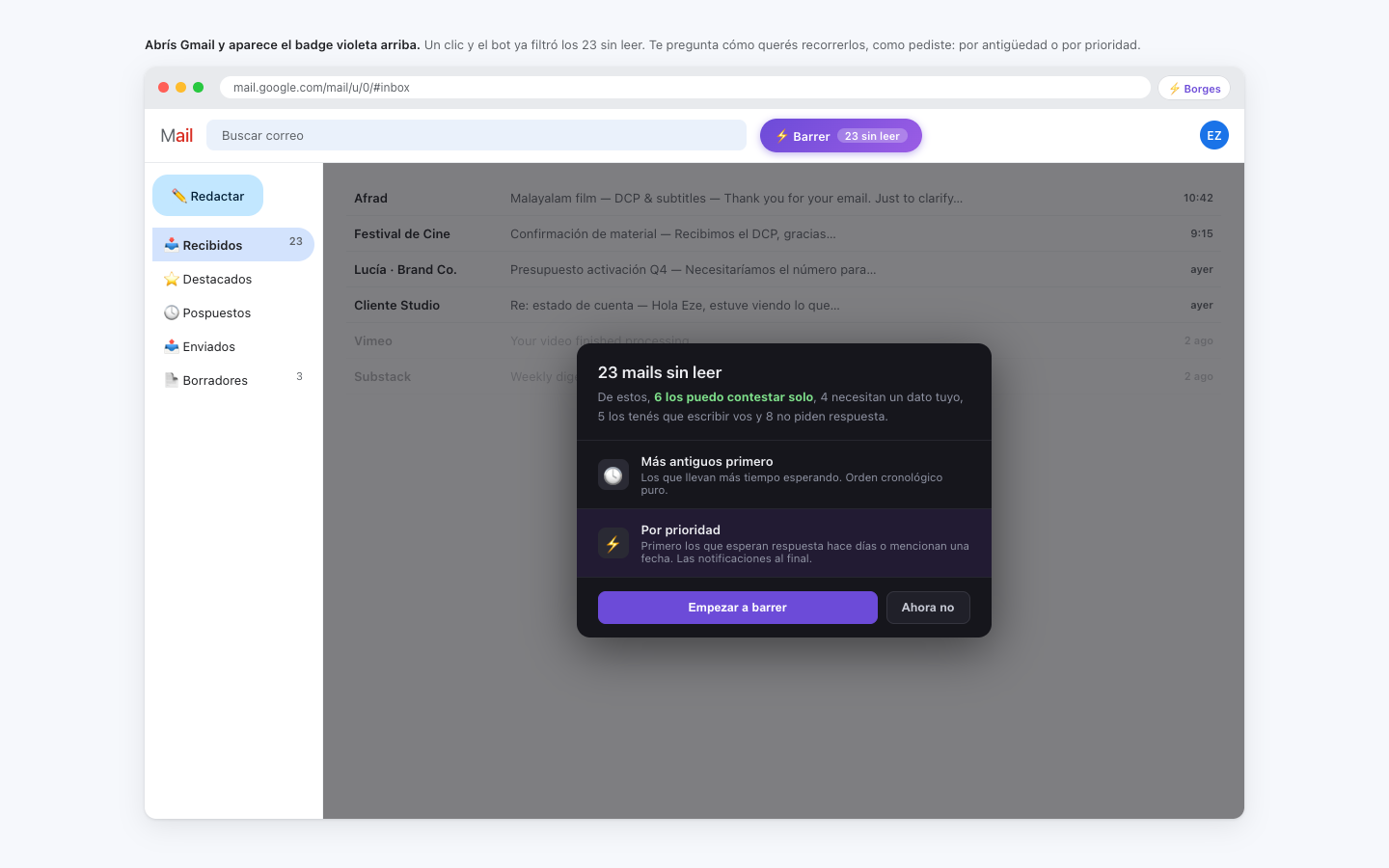
Reply assistant triage over an inbox: 23 unread mails classified into auto-draft, ask-me and human

Real interface design — demo inbox data, names illustrative.

Email operations · asset control

Reply Assistant + Delivery Validation

~6 hours/day recovered per position

Problem
Festival correspondence at a media company meant reading every thread, checking a separate system to see what had actually arrived, and writing careful bilingual replies — hours of inbox work per position, every day, with the risk of confirming receipt of something that never arrived.
What we built
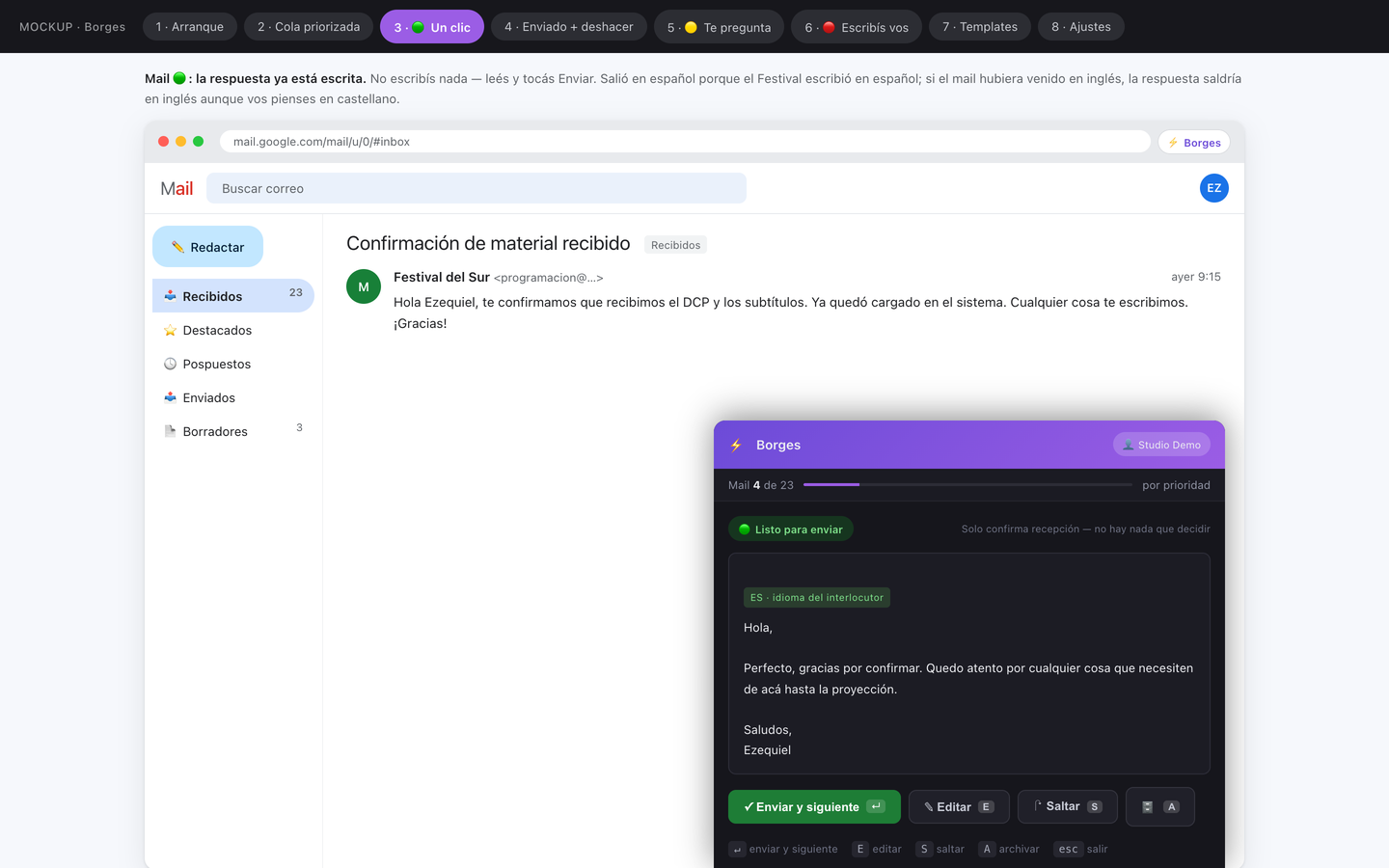
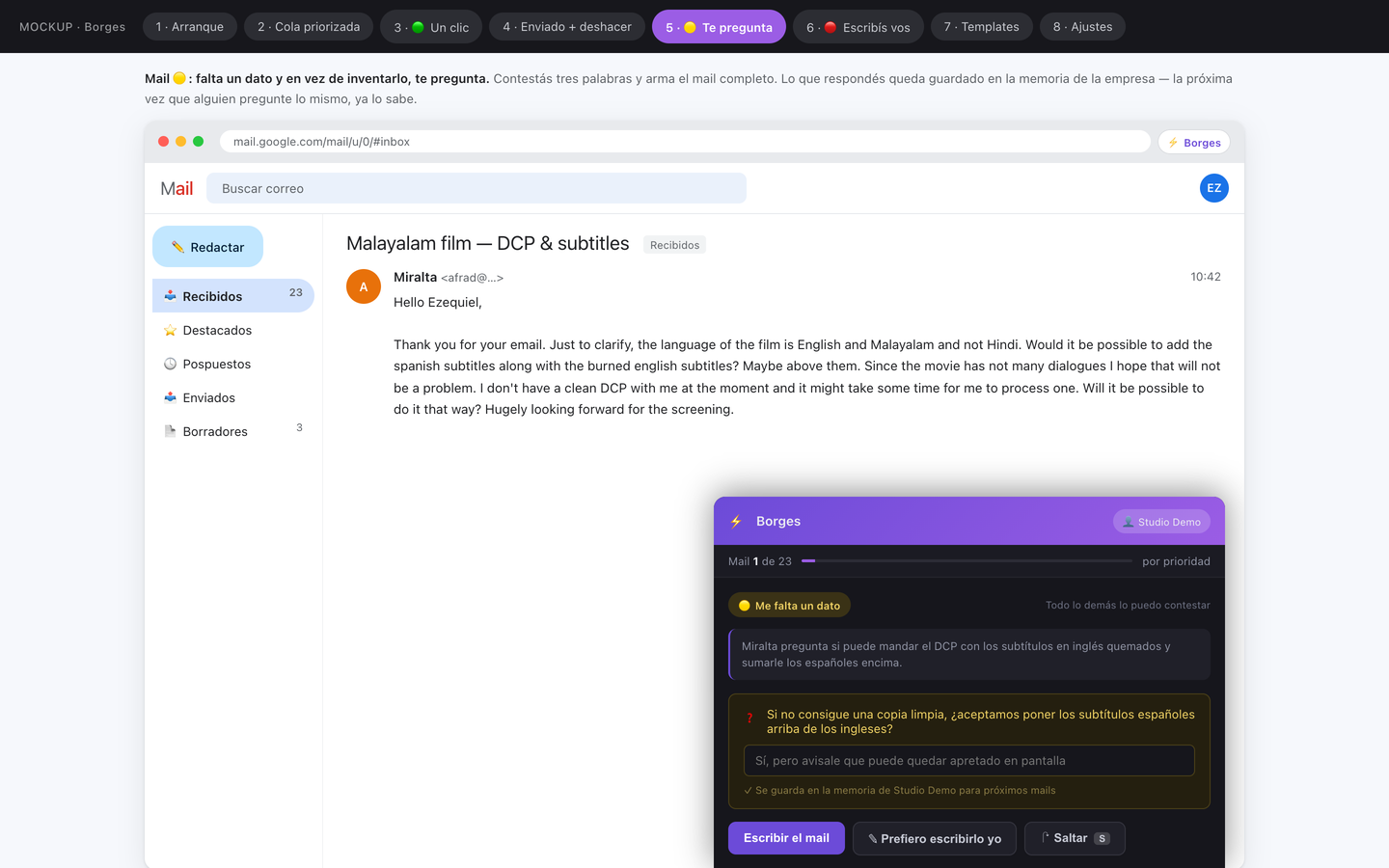
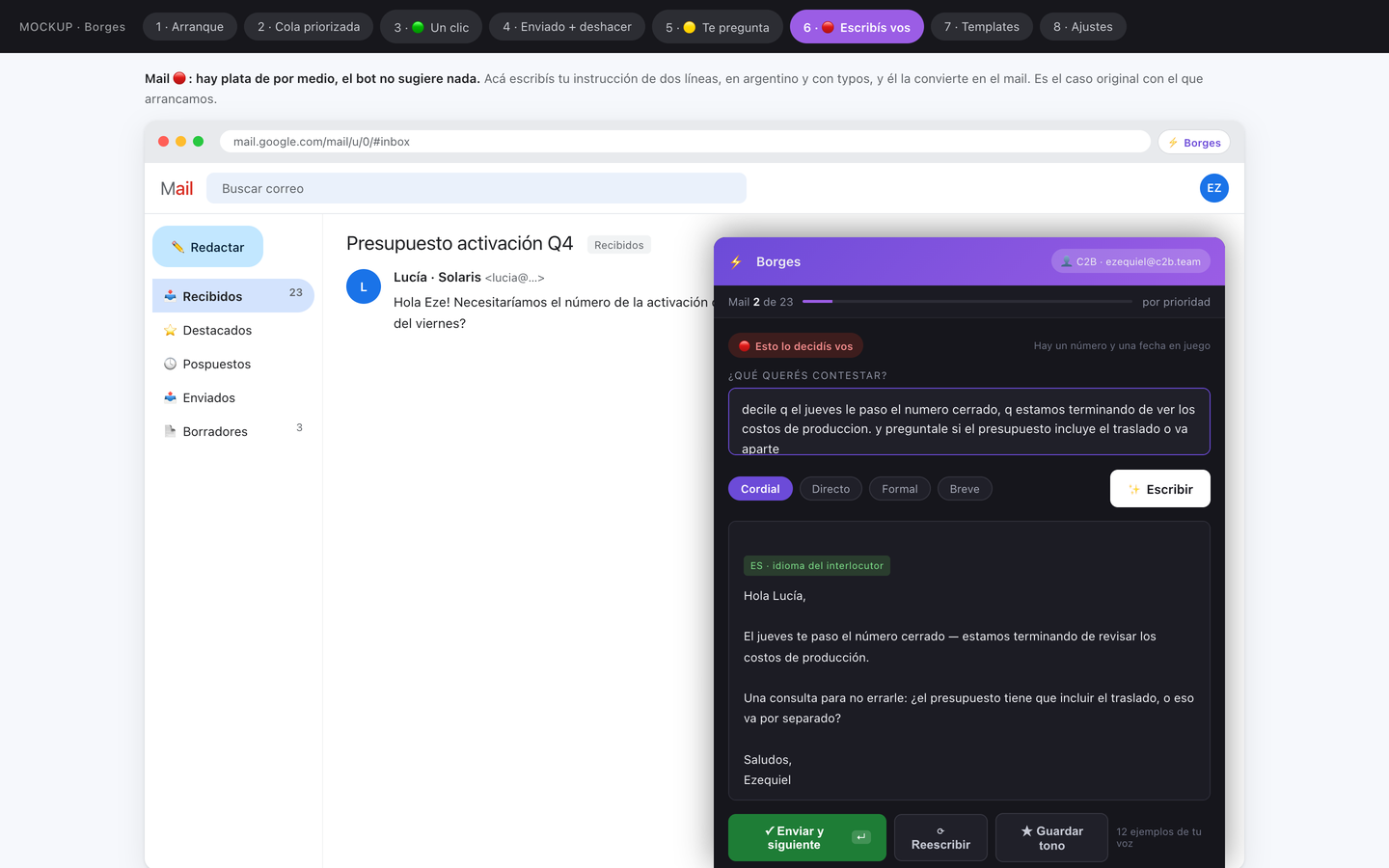
An assistant that lives inside the inbox. It reads the open thread and classifies it with a traffic light: green — the reply is already drafted; yellow — it asks up to three short questions first; red — a price, date or decision is at stake, so it steps aside for a human. Before answering about materials, it queries the delivery platform directly, so it can write "we received your projection assets but the catalog is missing" without anyone looking it up. It learns the team's tone from what they actually send, and always replies in the sender's language.
What changed
About six hours a day recovered per position, by the owner's measure. Communication got more consistent in both languages, and delivery status now comes validated from the system instead of someone's memory — the manual-verification error is out of the loop.

First words of a draft on screen in ~1.6 seconds; a 26-mail day costs about US$0.20 in AI.
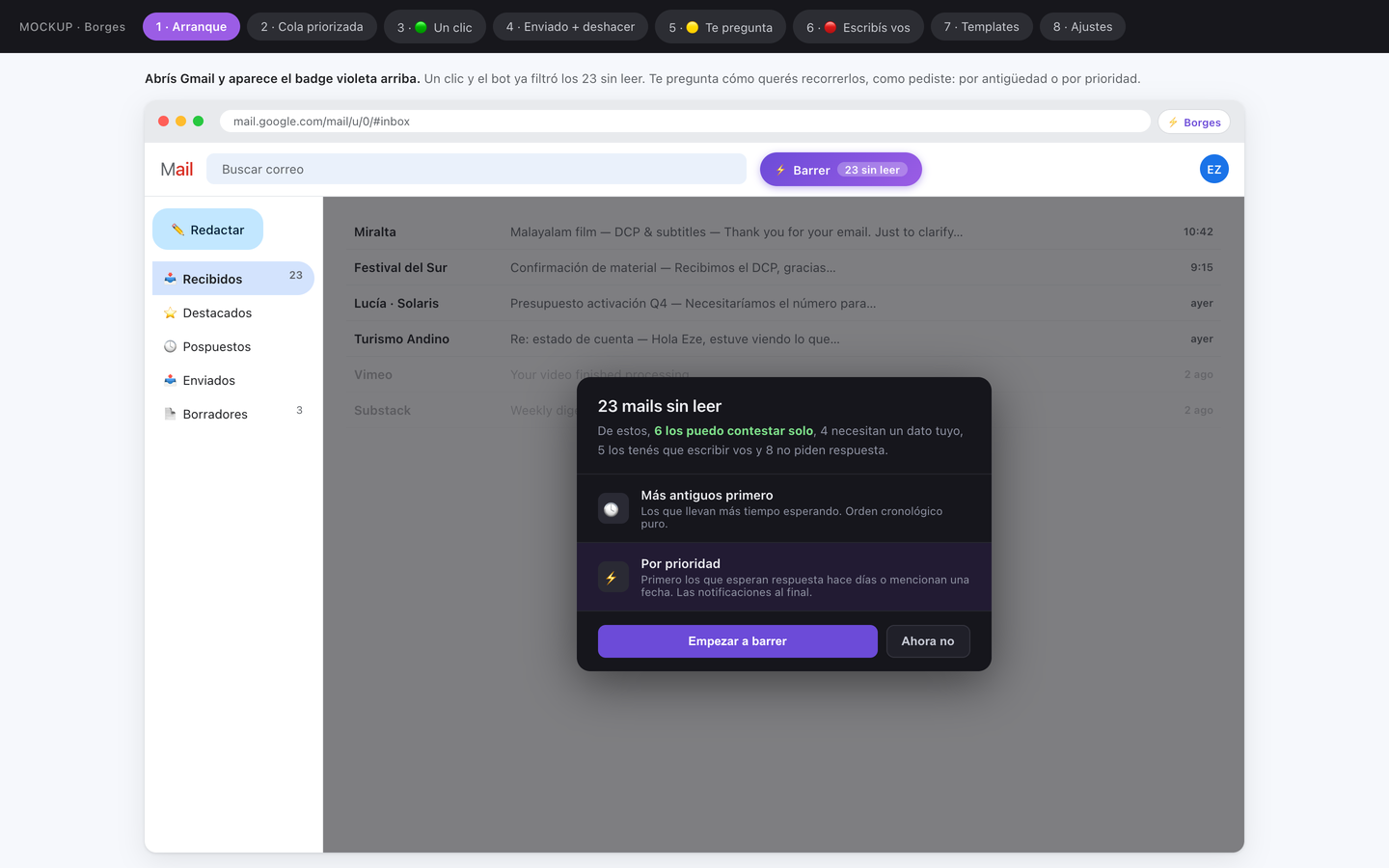
What the system does

  • Opens by itself when you hit Reply, reading the open thread — no copy-paste
  • Classifies every thread before drafting: green — the reply is ready; yellow — it asks up to three short questions; red — a price, date or decision is at stake, so a human writes; plus “no reply needed”
  • When in doubt, it downgrades — a risky mail never gets an automatic draft
  • Checks the delivery platform before answering about materials; only “submitted” counts as received
  • If the delivery system doesn't answer, it asserts nothing and hands the thread to a human
  • Always replies in the language of the counterparty's last message
  • Two configuration layers: a shareable company layer and a personal layer that never leaves your machine
  • Per-project templates with their own labels, keywords and facts — the project is detected by label first, keywords second, and never guessed
  • Learns your voice from what you actually send, weighting your corrections higher; it never learns from mail you wrote entirely by hand
  • A confirmed-facts memory with manual promotion, so one person's bad data never propagates to the team
  • A spend dashboard with month-to-date cost, per-mail average and a monthly cap that stops drafting when hit
  • Inserts into Gmail respecting the original quote, with one-click send

By the numbers

  • First words of a draft on screen in ~1.6 seconds; a complete reply in ~3.5
  • Under one cent per email after the first of the day — a 26-mail day costs about US$0.20
  • About 6 hours a day recovered per position, by the owner's measure — at ~250 working days, on the order of 1,500 hours a year
  • Four-state triage on every thread, delivery status validated per project

Does this look like your bottleneck?

This system started as one specific problem in one real company. Tell us yours in a sentence — within 24 hours we'll tell you whether it's buildable and whether the math is likely to work.

Show us the problem →

See all 13 systems →