E-learning · creator platform

A Phonics Reading Platform Built Around a Creator

Decodable stories across six levels, a microphone mode that turns words green as the child reads aloud, and new content weekly with no production team.

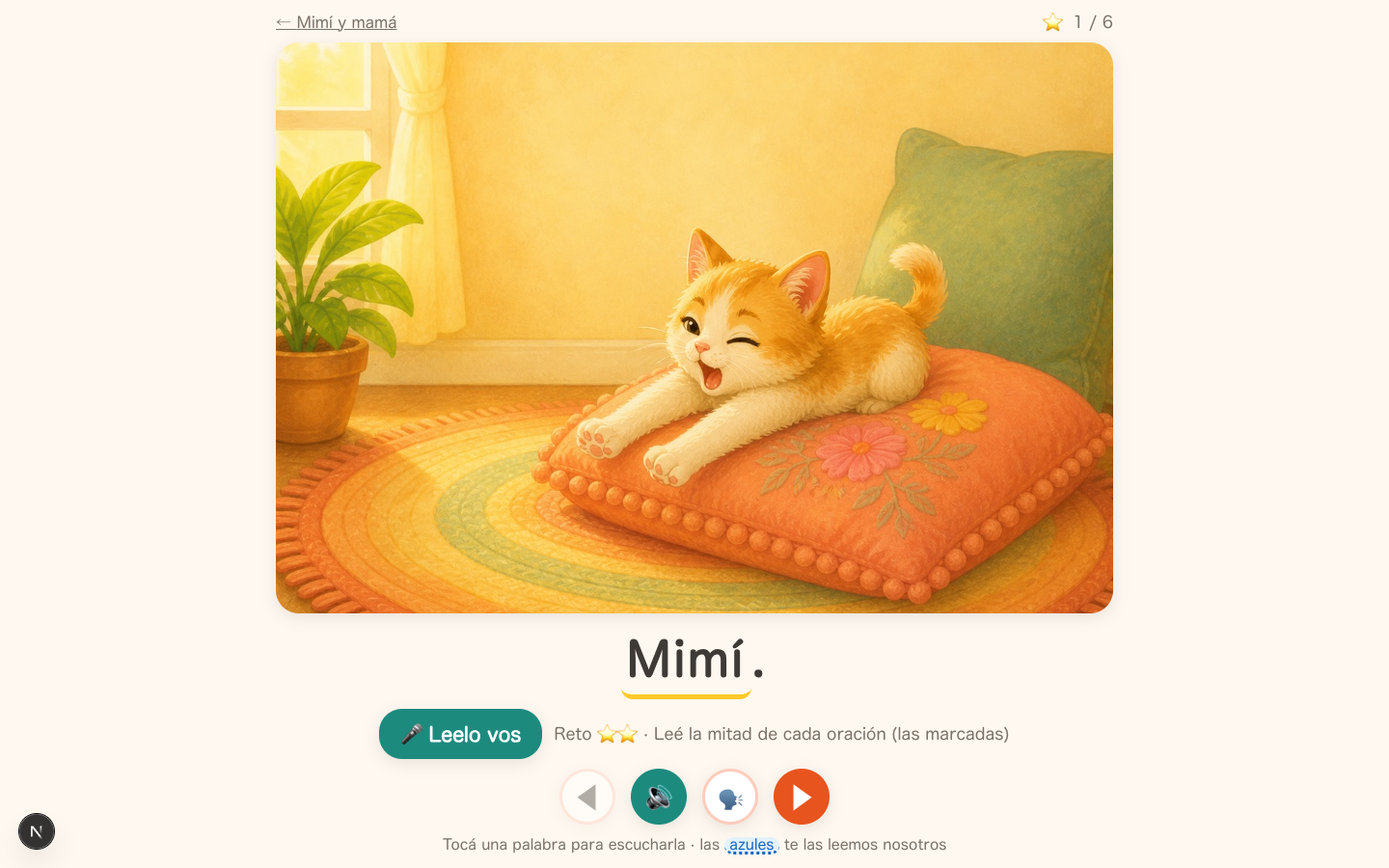
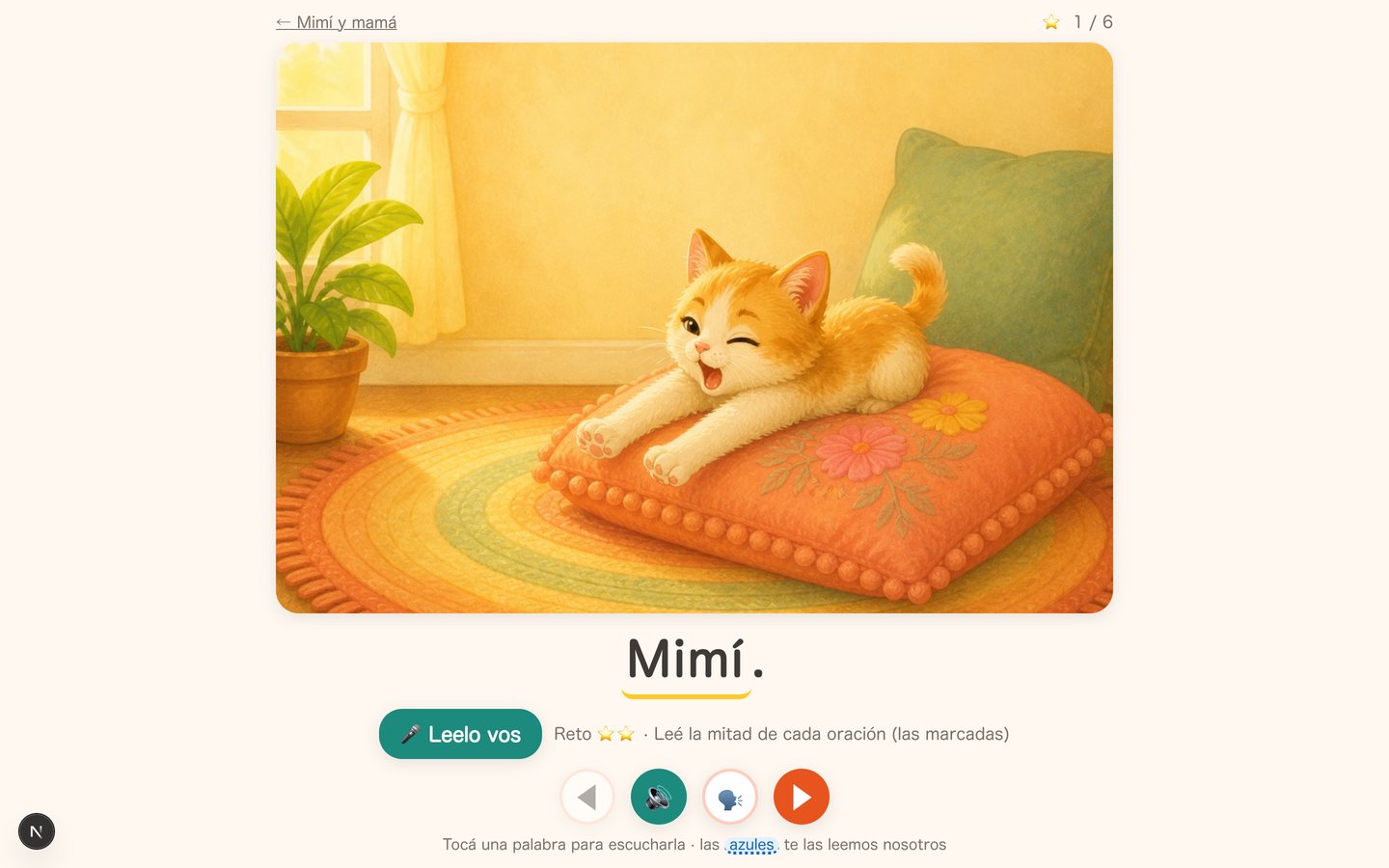
Story reader: full-page illustration of a kitten, the word Mimí highlighted, Leelo vos microphone button and reread challenge

Real interface — a story page with official artwork and the "Leelo vos" voice mode. Demo profile.

E-learning · creator platform

Historias y Cuentos — Reading Platform

New content weekly, no production team

Problem
A children's-content creator with a YouTube audience of families wanted to teach kids to read in Spanish. Generic e-learning tools can't follow a systematic phonics method, connect to a creator's channel and physical books, or grow a catalog every week without a production team.
What we built
A literacy platform tied to the creator's channel and book collection: decodable stories across six phonics levels, a microphone mode where words turn green as the child reads them aloud (processed live, never recorded), a five-star reread ladder, a parent progress panel — and an in-browser recording studio for the creator's own voice. An AI story generator with mandatory human editorial review keeps new content flowing; automated checks verify every story only uses the letters its level allows.
What changed
New content lands automatically every week without a production team — the pedagogy is validated by the system, not by hand. And the platform is private by design: no child accounts, no ads, no chat.

6 published stories · 42 original illustrations · 210 narrated audio clips — produced without a production team.
What the system does

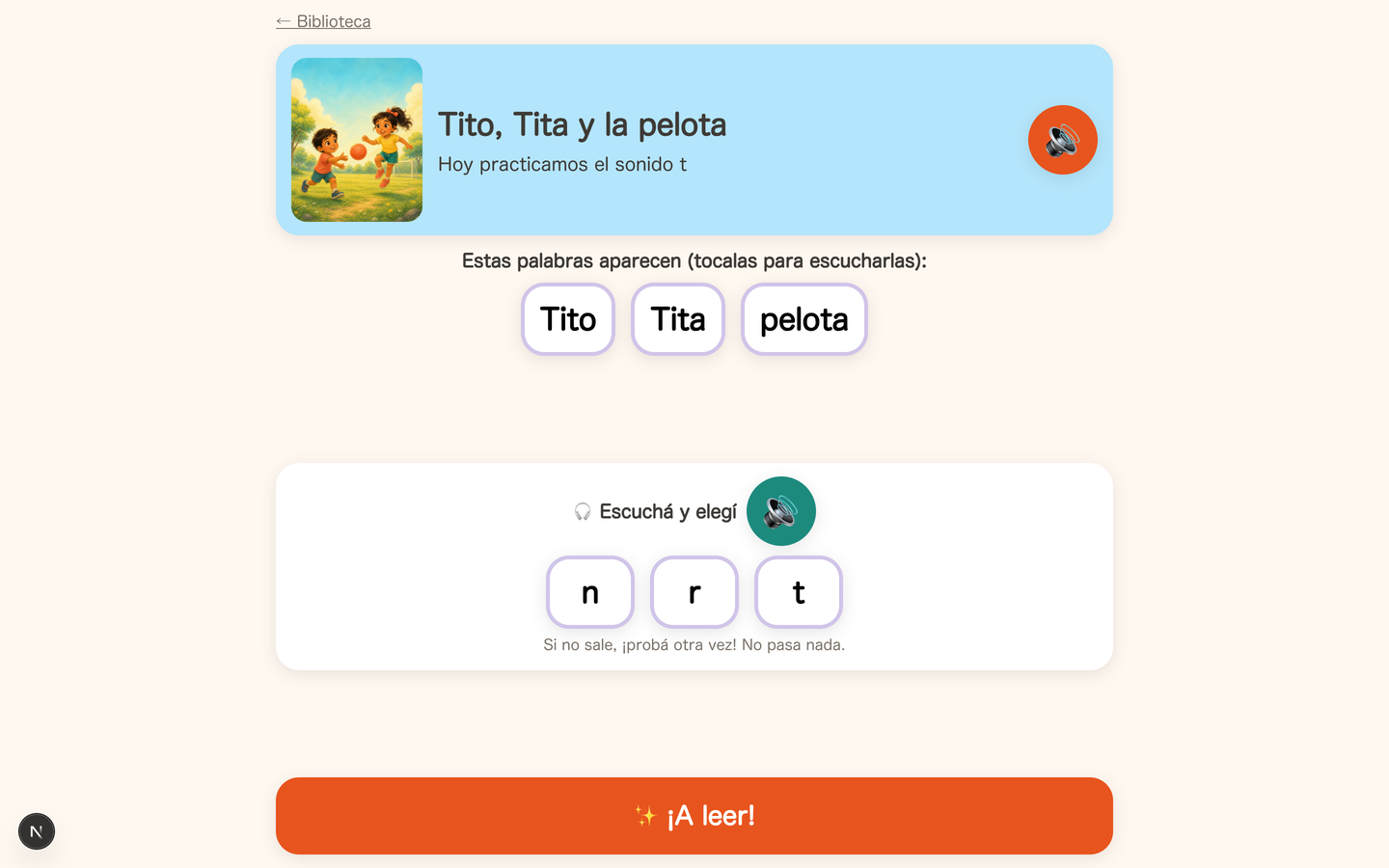
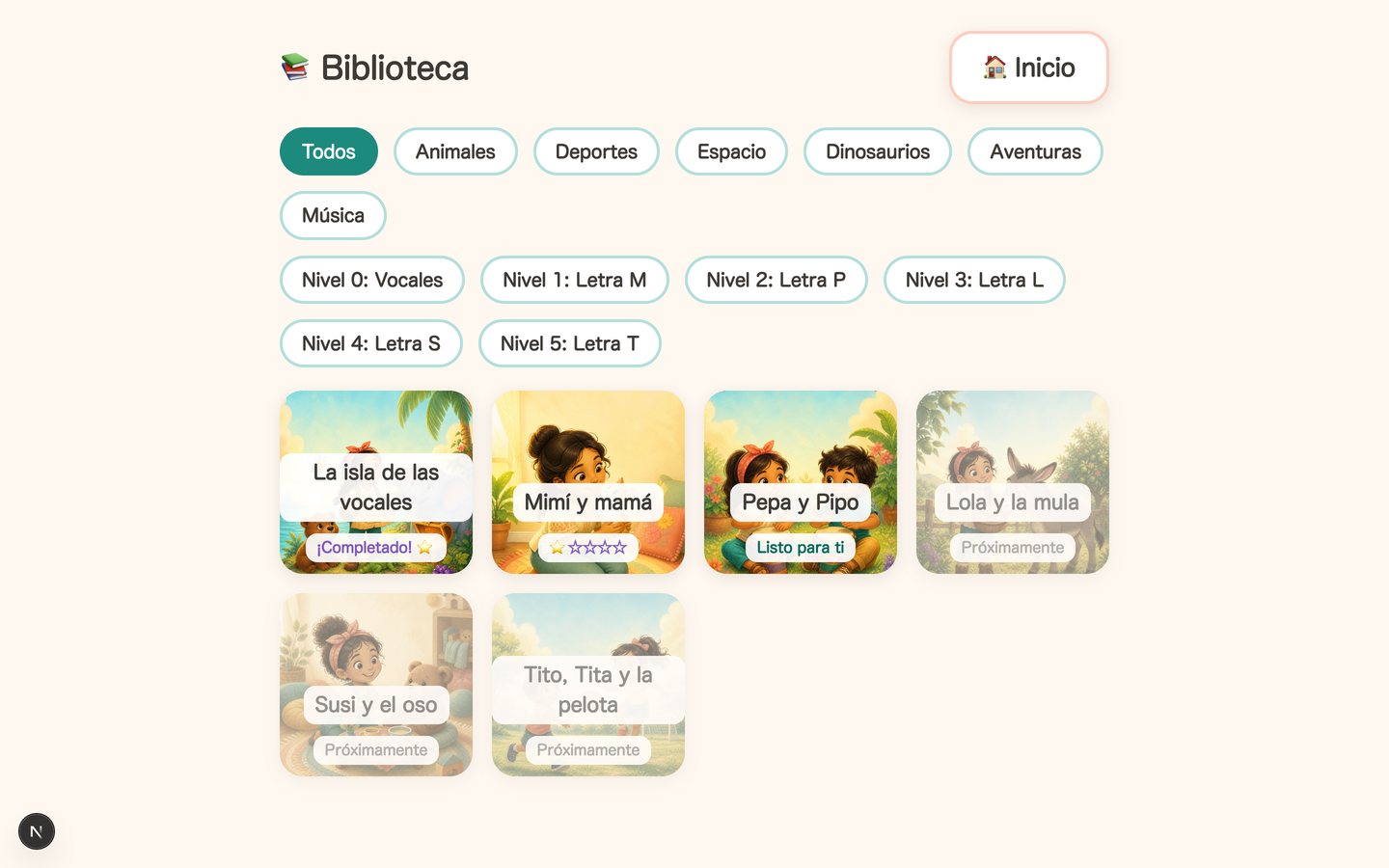
  • Six decodable stories across six phonics levels: vowels first, then m, p, l, s and t
  • Every story has three acts: preparation (target sound, support words, a listening activity), reading, and review
  • The reader highlights word by word, speaks any tapped word, and marks support words in blue — those never count as errors
  • A microphone mode turns words green as the child reads them aloud — processed live, never recorded
  • Comprehension questions, micro-activities and praise close every story, with the next one recommended
  • A skills model that refuses to over-credit: mastery needs 4+ correct answers, a 70%+ success rate, across 2+ sessions and 2+ different stories
  • Struggling with comprehension routes to a fluency re-read; struggling with a skill routes to a story that practices it
  • Level promotion is automatic at 60%+ comprehension — and adults can override it either way
  • A parent panel behind a PIN: weekly summary, star ladder, skills map and family practice ideas — never comparisons to other children
  • A recording studio lets the creator replace the device voice with her own, clip by clip
  • New stories can be AI-drafted, but always pass automatic phonics validation and mandatory adult approval before a child sees them
  • No child accounts, no ads, no chat, no stored recordings

By the numbers

  • 6 levels, 6 stories — one per phoneme milestone
  • 210 recorded audio clips in the creator's voice script
  • Mastery: at least 4 correct, 70% success, 2 sessions, 2 different stories
  • New content weekly with no production team

Does this look like your bottleneck?

This system started as one specific problem in one real company. Tell us yours in a sentence — within 24 hours we'll tell you whether it's buildable and whether the math is likely to work.

Show us the problem →

See all 13 systems →