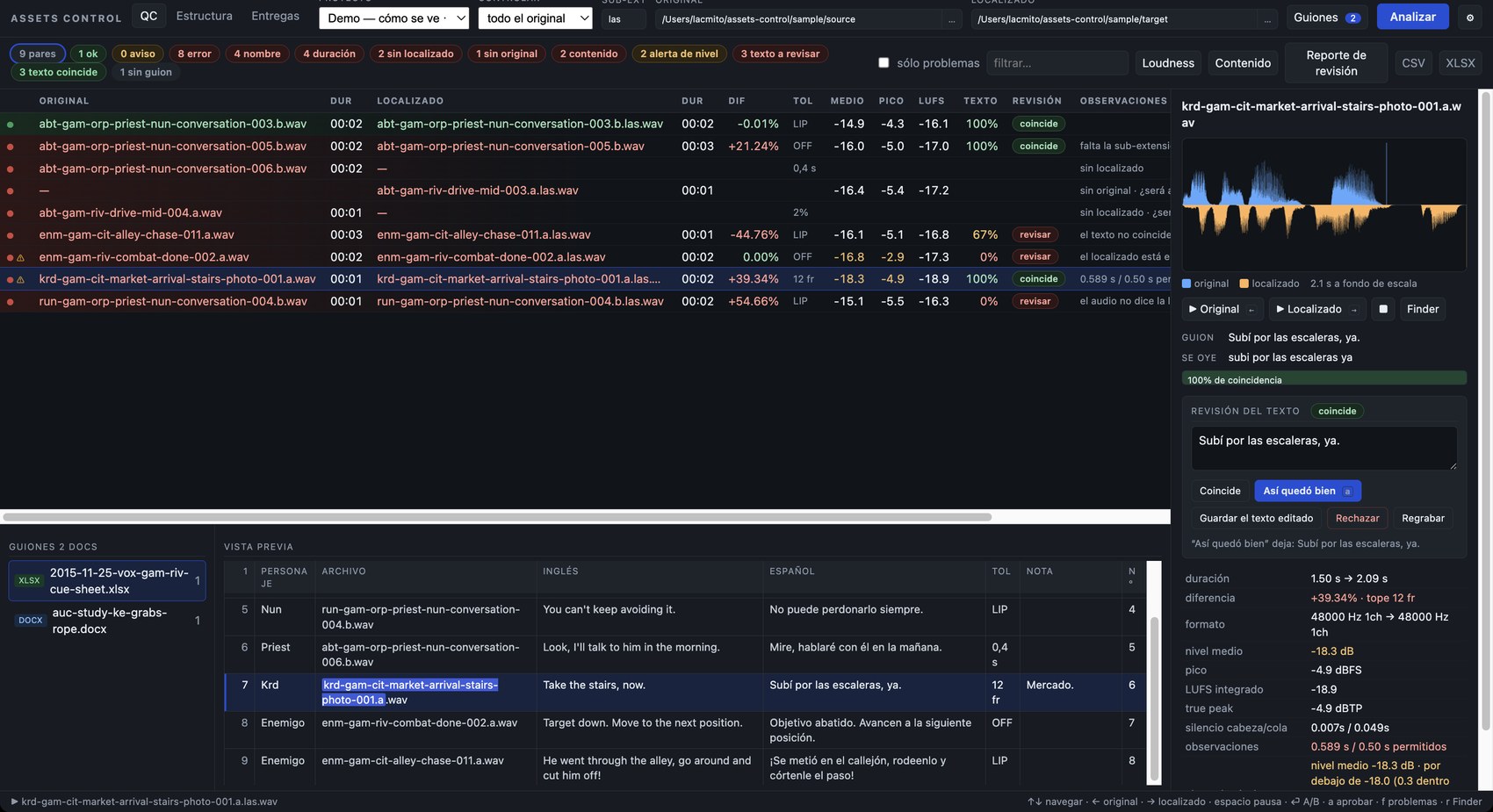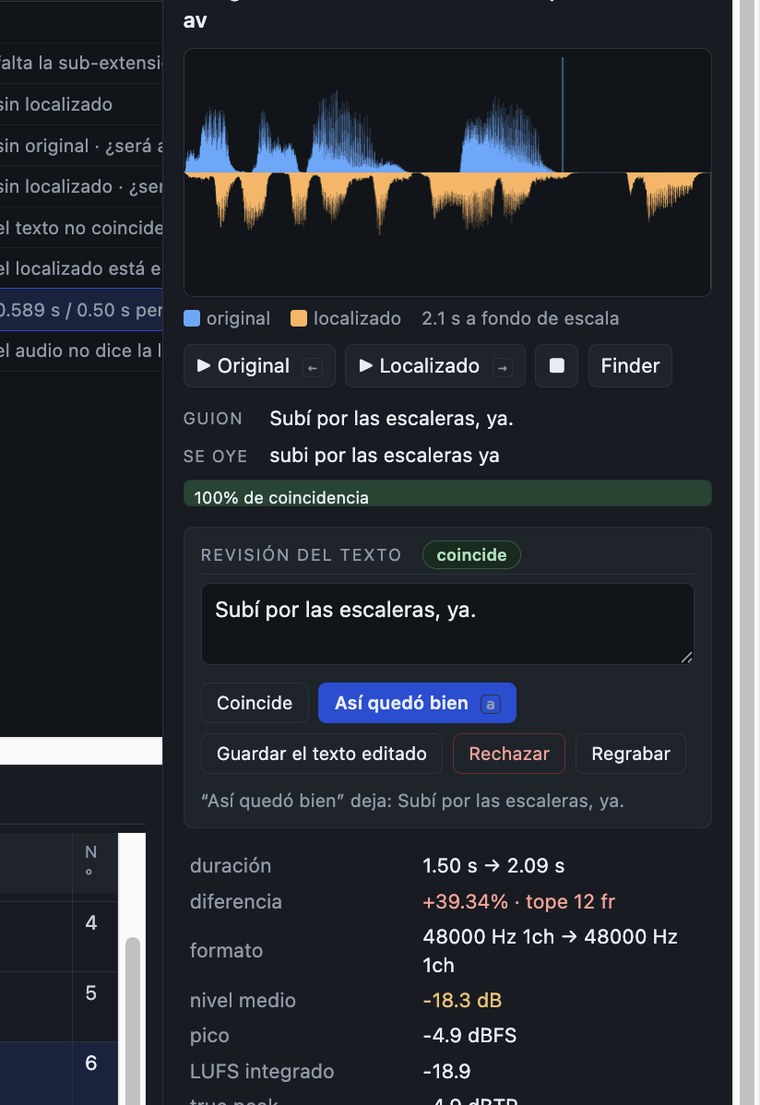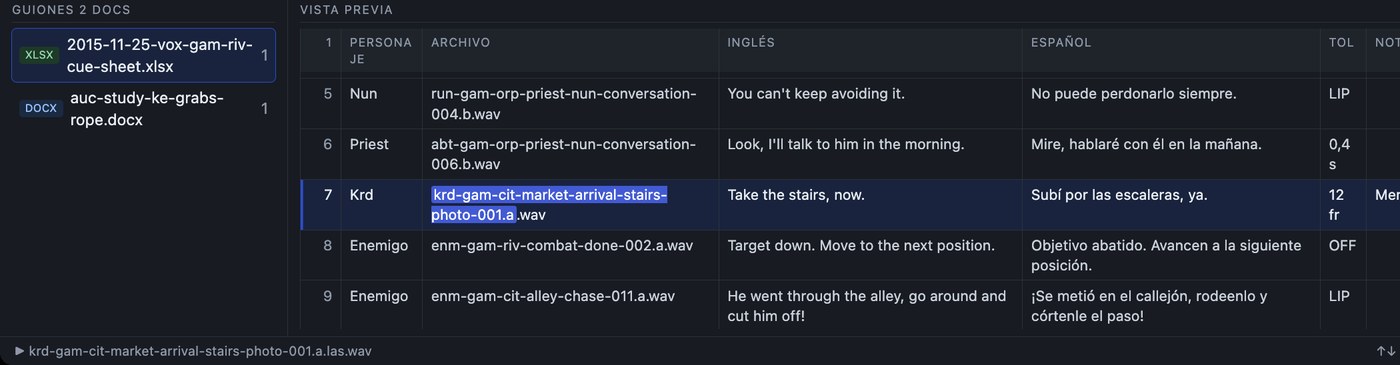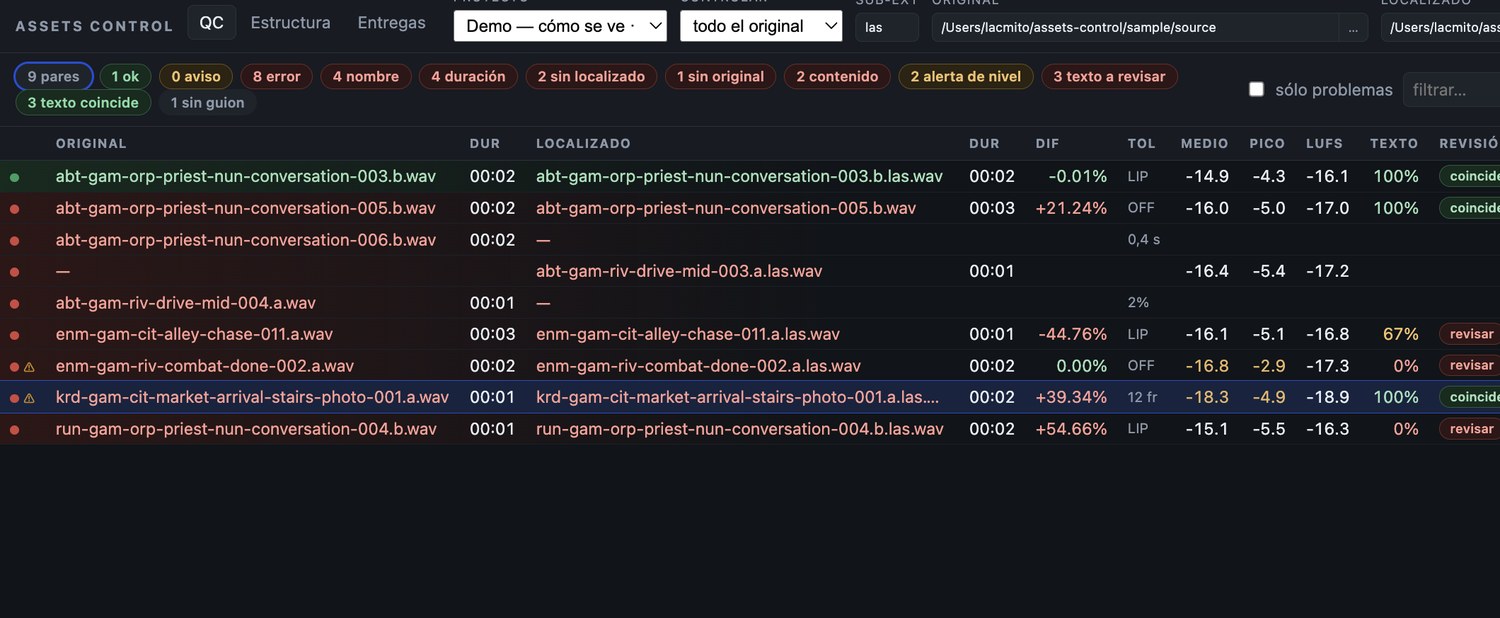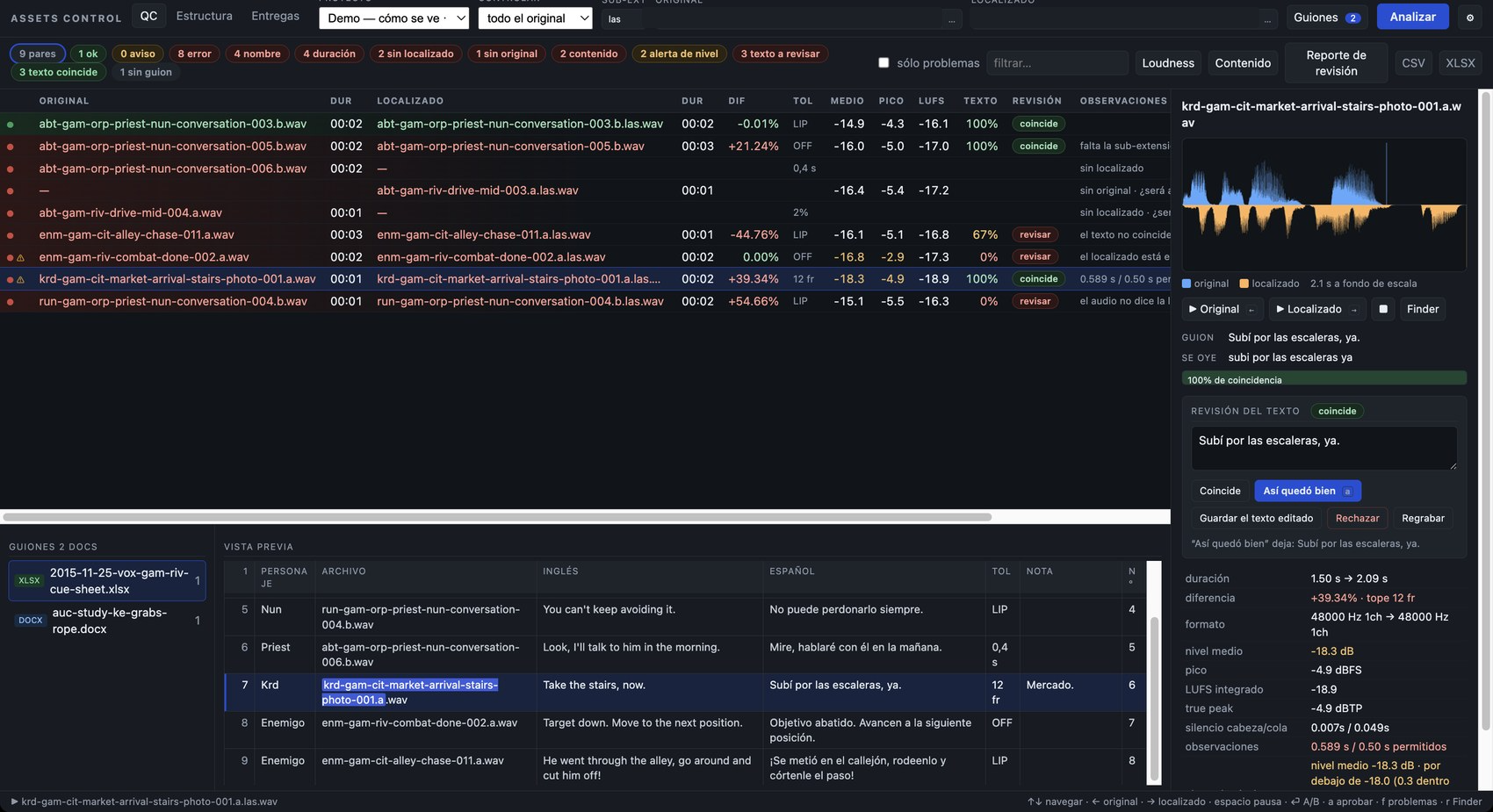
Real product — the QC screen on the built-in demo project. Takes and script lines are sample material.
Videogame localization · audio QC
ASSETS CONTROL — Videogame Audio QC
1,000 takes cross-checked in 295 ms
- Problem
- A videogame dub arrives from the recording studio with hundreds of takes. Someone has to check every filename against the original, every duration against the cue sheet's per-line tolerance, every level against a spec that arrives as prose ("around −12 to −18 dB") — and listen to each take to confirm it actually says its line. Then rebuild the client's delivery folder tree by hand.
- What we built
- An app that listens for you. It transcribes every take on-device and compares it to the script line in its own language — catching takes that don't say their line, cross-named takes, wrong-language deliveries and half-read lines. It checks names, durations against the cue sheet's own tolerance column, and loudness in both dB and EBU R128. Then it builds the outgoing delivery with the original's folder structure, fills the AsRec column into the client's own Excel, and hands the operator a report that starts with the reds instead of confirming what's already fine. Everything runs locally: no API, no account, no internet — not one byte of client material leaves the machine.
- What changed
- The cross-check of a thousand takes now takes under a second, and loudness measures at ~115× real time. The operator's day inverted: instead of listening through everything to find the problems, the machine listens through everything and the operator starts from the problem list. And the honest before/after: checking to this level of detail simply wasn't done before — a 9,000-take delivery would have taken at least two people three weeks, and content-level listening still wouldn't have been attempted at this precision, by the owner's account.
Zero recurring cost — open models, on-device. Built for Caja de Ruidos' localization operation.